Why Communities Keep an Annual Day
Why communities keep an annual day: learn how a seasonal custom records local change and how to choose a form that still fits the place and its needs.
Why communities keep an annual day becomes clearer when a familiar task changes: a garden no longer needs a major cleanup, but the start of planting season still matters. An annual custom can preserve that seasonal marker while letting its purpose evolve with the place.
Season gives the day meaning
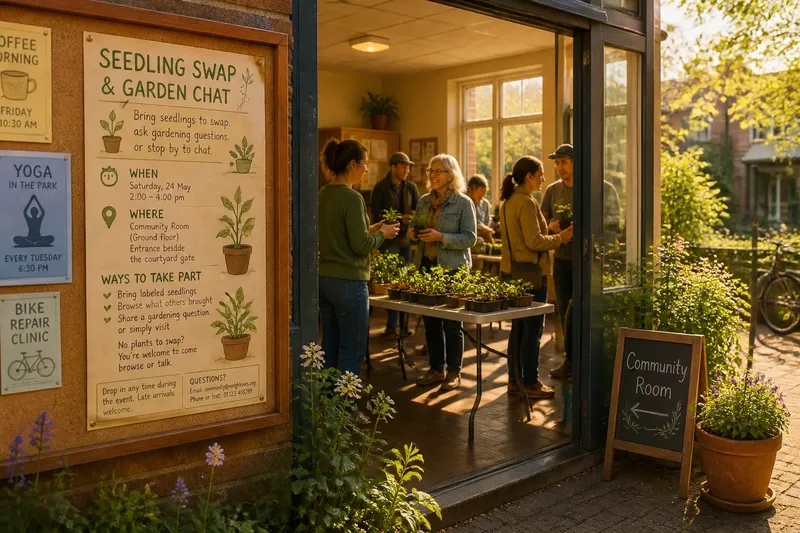
A recurring day often begins with a task tied to the time of year. Neighbors may prepare a community garden before planting, clear a shared path after autumn leaves fall, or bring supplies into a common room before cold weather. The season explains why the task belongs now.
Repeated details help people remember the occasion: a particular tool shed opened for the day, a recipe shared afterward, or a familiar route through the garden. Like a pencil mark on a doorframe, the custom records change without needing a formal ceremony.
The original work may eventually shrink or disappear. That does not automatically make the day pointless. Its value may shift toward marking a season, remembering how a shared place came to be, or noticing how that place now serves residents.
Three forms that fit
The seasonal workday
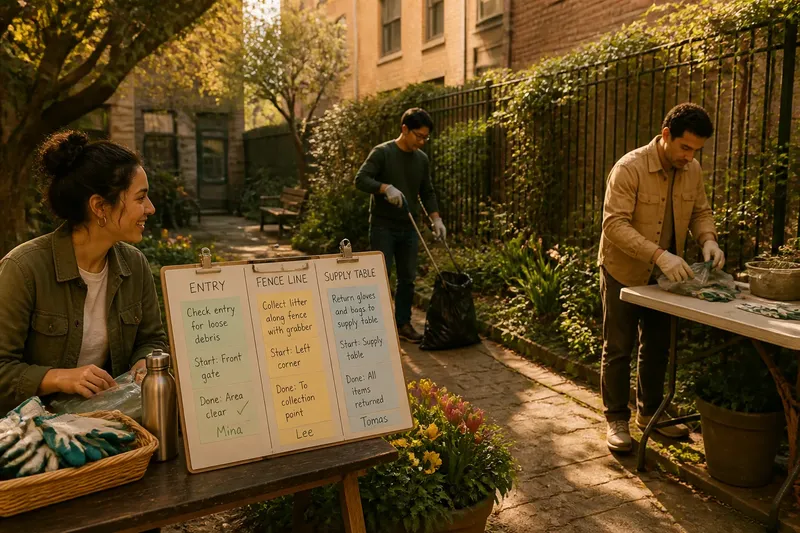
A workday keeps the practical reason visible. Neighbors might tidy a community room or prepare planting beds, with tasks chosen to suit the space’s current needs. The activity should remain modest enough that the custom does not become a yearly demand for the same few residents.
The memory gathering
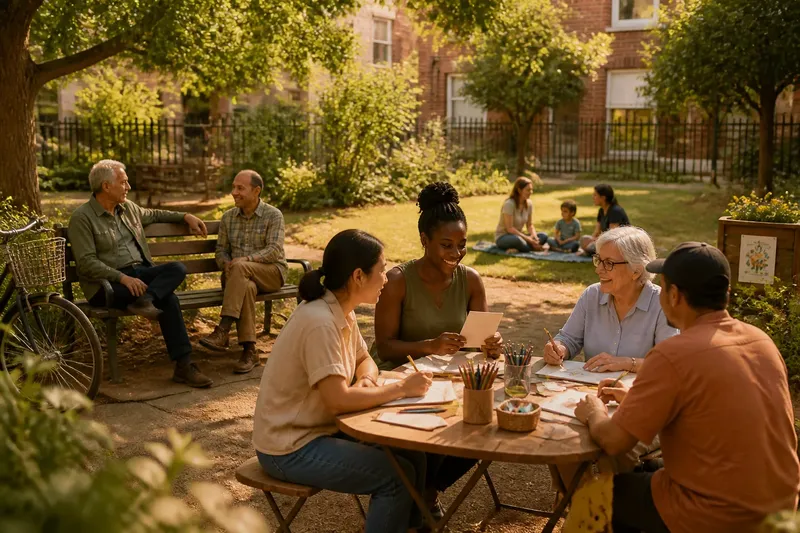
A gathering centered on local memory can include a shared meal, objects connected to the place, or stories about a custom’s beginnings. This form suits a tradition whose original task has faded. Repeated details can make the day recognizable, while new stories keep it from becoming a scripted performance.
The mixed-purpose day
A mixed-purpose day combines a limited practical task with a separate moment for remembering or marking the season. Set a clear endpoint for the work, such as putting garden tools away before the shared meal begins. That boundary makes the occasion’s changing purpose visible rather than letting the task consume the day.
Choosing a form that lasts
Look at what the custom does now, not only what it did when it began. Use the observations below to decide what to keep and what to change:
- Seasonal purpose: Check whether a task or natural change still gives the day a clear reason. If it does, keep that seasonal anchor; if not, move the custom to a season that fits its present purpose.
- Current need: Check whether the shared place still needs the traditional work. If it does, retain a suitably small version; if not, replace the task with a present-day purpose or retire it.
- Local memory: Check whether residents can name a story, place, or repeated detail they want to preserve. If they can, make room for it; if not, avoid adding ceremonial details just to make the day seem important.
- Practical burden: Check whether planning and preparation keep falling to the same people. If they do, simplify the occasion or share specific duties; if they do not, preserve the arrangement that is working.
- Change over time: Check whether the format can adapt as the place and its needs change. If it can, keep the flexible elements; if it cannot, revise the fixed parts before they turn into obligations.
- Meaning today: Check whether the day still marks a season, preserves a useful memory, or serves a current local purpose. If it does, keep the parts that do that work; if it does not, let the custom end rather than repeating it without a reason.
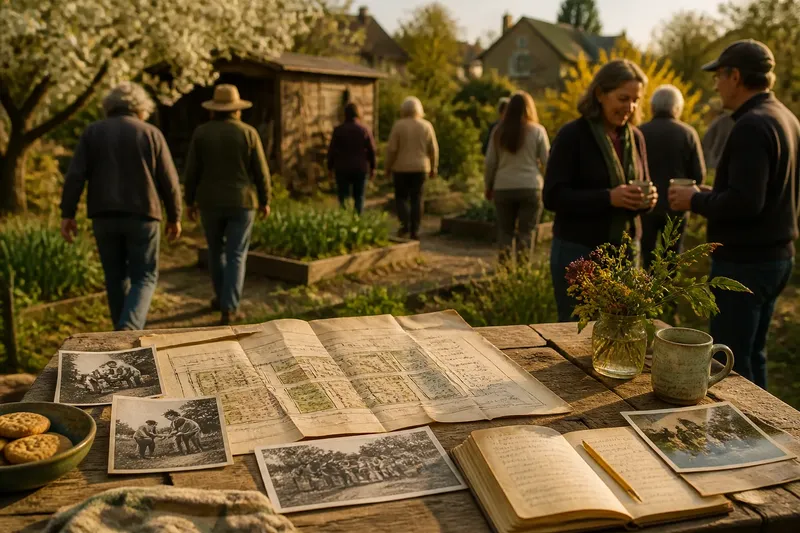
Say a neighborhood’s annual spring day began with clearing planting beds, but the beds now need little work. Residents note that the first planting season is still a meaningful marker and that older neighbors remember how the beds were built. They replace the long cleanup with a brief walk around the garden, set out an old planting plan for people to look at, and end the day after sharing a meal. The resulting custom still marks the season and preserves a local memory, while the obsolete workload is gone.
How should the custom change?
Does the activity have to stay the same?
No. Keep a recognizable thread, such as the season, shared place, or remembered purpose, and adjust the activity as circumstances change. The thread helps residents recognize the custom without requiring them to repeat an outdated task.
What if the original need disappears?
Check whether the day serves another present purpose, such as marking a seasonal change or preserving a local memory. If it does, retain the useful parts; if it does not, ending the custom is a reasonable choice.
How can the day honor different memories?
Make space for more than one account of how the custom began or what the place means. If residents remember events differently, acknowledge that difference rather than forcing one official version; if a shared account is clear, record it in simple language.
When is it time to retire the custom?
Consider ending it when the activity no longer fits the place and residents cannot identify a current purpose worth preserving. If one element still matters, keep that element in a new form; otherwise, let the annual date pass without treating that choice as a failure.
Memory without a script
Repetition gives an annual custom a recognizable shape, but it should not freeze the neighborhood in an earlier version of itself. Keep the season, place, or memory that still matters, and change the parts that no longer serve a purpose.
Why communities keep an annual day is ultimately a question of what the custom helps residents notice and remember. A clear reason for keeping it—and permission to revise or end it—lets the tradition reflect the place as it is now.