Choosing a Bench, Table, or Open Green for a Neighborhood Gathering
Choose a bench, table, or open green for a neighborhood gathering by matching the setting to shared tasks, changing conversations, and the space people need.
For a neighborhood gathering, choose a bench, table, or open green by matching the setting to the group’s activity. A table gives a shared task a home; a bench makes pausing simple; open ground keeps the gathering flexible.
Start with what people will bring and do. Then check the site’s rules, paths, and existing features before deciding how to use the space. Treat the layout like a kitchen counter: give the main activity a clear surface, but leave room for people to set things down and move around.
Bench for Pauses
A bench suits a gathering built around conversation, short visits, or watching an activity. It gives someone a place to sit without requiring them to join a task or claim a spot in a circle.
Its fixed position also shapes the group. People seated side by side may talk easily with a neighbor, but may have less contact with people across the space. Before choosing a bench, look at what it faces: a garden, a play area, or a busy path each creates a different focus.
Check the approach and the space around the seat. If the bench is beside a route, keep that route clear. If the activity is elsewhere, make sure people resting there can still follow what is happening.
Table for Shared Tasks
A table helps when neighbors will share food, sort flyers, make something, or use common supplies. It gives the group a practical center and lets a newcomer participate by picking up an item or taking a seat.
That center can also crowd out other ways of joining. People who do not want to eat or work may have no obvious place nearby. Keep some surface clear, put shared materials within easy reach, and leave a nearby spot for someone who wants to watch or talk instead.
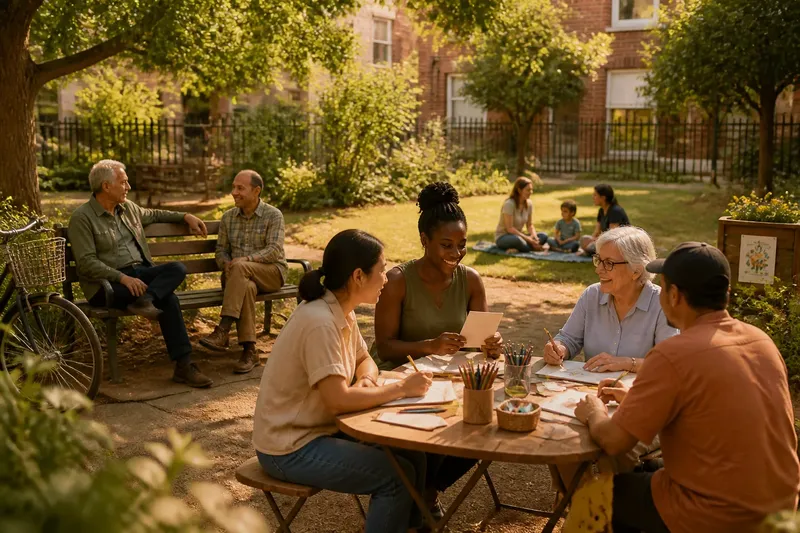
Say you are planning an invented postcard-making meet-up in a courtyard. You have paper, colored pencils, and a small table. Put the supplies at one end, leave the other end open, and position the table where people can approach without blocking a path. The expected result is a clear work area, space to set down a drink, and room for someone to join without first asking the group to rearrange everything.
Open Ground for Flexibility
Open green suits activities that shift shape: a picnic, a loose play session, or several small conversations. People can spread out or regroup without being tied to furniture or a single shared surface.
Without a clear center, though, arrivals may not know where to go. Use a modest marker, such as a sign or a basket of shared materials, to show where the gathering starts. Keep the marker out of paths and leave open space for people to move through.
Open ground is less useful when the group needs a steady work surface or when participants would benefit from a nearby seat. Check whether the site allows the planned activity and any items you intend to bring.
Mixed Layouts for Different Activities
Combining a bench, table, and open area can serve different activities without forcing everyone into one arrangement. Place the table near the main activity, keep a seat within view, and leave the open area available for movement or smaller conversations.
Make the connections between those spots easy to understand. If they are separated, people may form unrelated groups. If they are crowded together, movement gets awkward. Keep sightlines open so a person sitting down can follow the gathering, and avoid using a route as overflow space.
Before moving furniture or setting out equipment in a public place, read posted rules or ask the site manager what is permitted. Use existing features when possible; the best layout may require no rearranging at all.
Choosing a Gathering Layout
Use these checks to decide which setting fits the activity. For each observation, follow the matching action; if the first option does not fit, use the alternative.
- Shared materials: If people will use paper, tools, or serving items, choose a table; if no shared surface is needed, use a bench or open ground.
- Frequent arrivals and departures: If neighbors will stop briefly, place the gathering near a usable seat; if people will stay for a group activity, center the layout on that activity instead.
- Changing activities: If people will move between play and conversation, preserve open ground; if the gathering centers on making or sorting, use a table.
- Need for a clear meeting point: If newcomers could have trouble locating the group, mark one visible gathering spot; if the space is already obvious, leave it unmarked.
- Routes through the site: If a proposed setup would block a path, move it away from the route; if the site has no clear approach, choose another permitted area.
- Different ways to participate: If some people may prefer to watch or rest, add a nearby seat; if the activity needs more room, keep the space open and find seating that does not obstruct it.
- Site rules: If posted instructions restrict furniture or activities, follow them and adapt the plan; if the rules are unclear, ask the site manager before setting up.
Questions About Layouts?
Which layout works for conversation?
A bench or seats facing one another can support a quiet chat. For a larger group, use open ground with a visible meeting point so arrivals can find the conversation.
Is a table useful for shared food?
A table gives people a place for dishes and cups, but it can draw the group into a tight cluster. Leave room to approach it and keep a nearby seat available for anyone who would rather rest.
How can open green feel organized?
Choose one visible point as the gathering’s center, using a small sign or shared supplies as a marker. Keep paths clear and let the rest of the space stay flexible.
What if the gathering needs both a seat and open space?
Use a bench or nearby seat at the edge of the activity area, with open ground left clear for movement. If the features are too far apart or the route between them is blocked, choose a more connected arrangement.
Set Up Around the Activity
For a neighborhood gathering, the useful choice is the one that supports the activity without taking over the shared place. Match the surface or seating to what people will do, keep routes open, and check local rules before arranging public space.
Before guests arrive, stand where they will enter and look for the first place they can pause, sit, or join in. If that choice is not clear, shift the gathering point or its marker. A small adjustment can make the space easier to read without turning a casual meet-up into a formal event.